Japanese Restaurant AI and PSD Fyer: A Powerful Tool for Modern Design Workflows
In today's fast-paced creative landscape, designers, entrepreneurs, and marketers are constantly seeking tools that streamline their workflows while maintaining high-quality output. One such solution gaining traction is the combination of Japanese Restaurant AI and PSD Fyer. These tools offer a unique blend of artificial intelligence, vector design, and print-ready layouts, making them ideal for professionals across various industries.
What Is Japanese Restaurant AI and PSD Fyer?
Japanese Restaurant AI refers to the integration of artificial intelligence in the design and layout creation process, particularly for restaurant branding and marketing materials. This technology enables the generation of visually appealing designs with minimal manual input, adapting to specific brand identities or campaign goals. It leverages machine learning algorithms to analyze trends, user preferences, and design principles, ensuring outputs that resonate with target audiences.
PSD Fyer, on the other hand, is a design tool that focuses on providing ready-to-use templates in Adobe Photoshop Document (PSD) format. These templates are tailored for various applications, including restaurant branding, marketing collateral, and digital assets. The key advantage of PSD Fyer lies in its flexibility and customization options, allowing users to modify elements such as color schemes, typography, and layout structures without compromising quality.
Together, these tools form a powerful ecosystem that caters to both beginners and experienced designers. They are particularly well-suited for those working in the food and beverage industry, where visual appeal plays a critical role in customer engagement and brand recognition.
Why Are Professionals Paying Attention to Japanese Restaurant AI and PSD Fyer?
The growing demand for efficient and scalable design solutions has made Japanese Restaurant AI and PSD Fyer increasingly relevant. In an era where time is a valuable resource, these tools offer a way to produce high-quality, professional-grade designs quickly and effectively.
One of the main reasons professionals are turning to these tools is the ability to maintain consistency across multiple design assets. Whether it's creating menus, signage, or social media graphics, having a unified visual language helps reinforce brand identity and enhances customer perception.
Moreover, the integration of AI in design processes allows for greater personalization. By analyzing consumer behavior and market trends, Japanese Restaurant AI can generate designs that align with current aesthetic preferences, ensuring that the final product remains competitive and appealing.
Understanding the Technical Specifications
For designers who prioritize precision and scalability, the technical specifications of these tools are worth noting. The A3 size of 297×420mm provides ample space for detailed layouts, making it ideal for print materials such as posters, banners, and brochures. The inclusion of a 5mm bleed area ensures that printed edges are trimmed correctly, preventing any unwanted white borders or misalignment.
These tools support multiple file formats, including editable vector AI, PSD, EPS, and PDF, offering versatility in how designs can be used and shared. The CMYK 300 dpi standard ensures that the final output is suitable for professional printing, maintaining vibrant colors and sharp details.
Additionally, the JPG preview feature allows users to get a quick visual representation of their design before exporting or printing. This is especially useful for those who need to present concepts to clients or stakeholders without waiting for full-resolution files.
How Does This Fit Into Broader Industry Trends?
The rise of Japanese Restaurant AI and PSD Fyer reflects broader shifts in the creative and business landscapes. As digital transformation continues to reshape industries, the demand for automation and efficiency in design workflows is on the rise.
From a business perspective, these tools help small and medium-sized enterprises (SMEs) compete with larger brands by enabling them to create high-quality marketing materials at a fraction of the cost. This democratization of design access is reshaping how businesses approach branding and customer engagement.
From a creative standpoint, the integration of AI into design processes opens up new possibilities for experimentation and innovation. Designers can explore complex visual concepts more easily, pushing the boundaries of traditional design practices.
On a consumer level, the increasing importance of visual storytelling means that businesses must deliver compelling and consistent branding experiences. Tools like Japanese Restaurant AI and PSD Fyer help ensure that this message is communicated effectively across all touchpoints.
Practical Applications and Use Cases
Let’s look at some practical examples of how Japanese Restaurant AI and PSD Fyer can be applied in real-world scenarios:
- Menu Design: Restaurants can use these tools to create visually striking menus that reflect their brand identity while ensuring readability and aesthetic appeal.
- Signage and Banners: With the A3 size and bleed area support, these tools are perfect for designing eye-catching signage and promotional banners for physical locations.
- Social Media Assets: The editable vector formats allow for easy customization of social media posts, ensuring brand consistency across platforms.
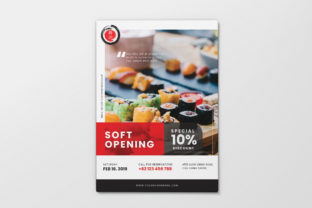
- Marketing Collateral: From flyers to brochures, these tools enable the rapid production of high-quality marketing materials tailored to specific campaigns.
By leveraging these tools, businesses can not only save time but also enhance the overall impact of their visual communication strategies.
What Makes These Tools Stand Out?
While there are many design tools available, Japanese Restaurant AI and PSD Fyer stand out due to their focus on efficiency, customization, and adaptability.
Unlike generic design software, these tools are specifically tailored for the restaurant and hospitality industry. This means they come pre-loaded with templates and elements that are relevant to this sector, reducing the need for extensive customization from scratch.
Additionally, the inclusion of documentation, font download links, and image preview download links makes the user experience more seamless. Users can easily access resources needed to complete their projects, ensuring a smooth workflow from concept to execution.
Conclusion: Embracing the Future of Design
In an ever-evolving creative landscape, staying ahead of the curve requires embracing new technologies and tools that enhance productivity and creativity. Japanese Restaurant AI and PSD Fyer represent a significant step forward in this journey.
Whether you're a designer looking to streamline your workflow, a business owner aiming to elevate your brand presence, or an entrepreneur exploring new ways to engage with customers, these tools offer a versatile and powerful solution. By combining the power of AI with the flexibility of vector design, they open up new opportunities for innovation and excellence in the world of design.
As we move toward a future where automation and personalization become the norm, investing in tools like Japanese Restaurant AI and PSD Fyer is not just beneficial—it's essential.